


Abstract
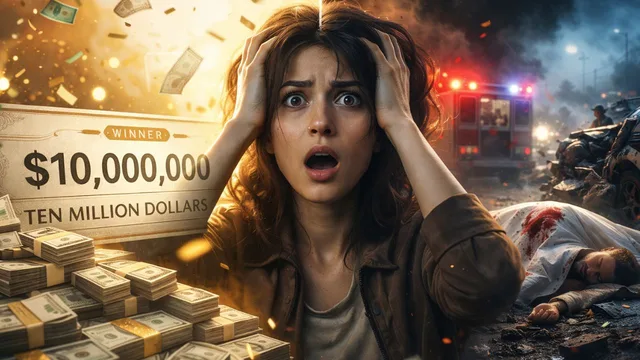
Luck is often called coincidence. But real-life events show something far more complex. In this video, we explore: Unbelievable real incidents of extreme luck Brutal unlucky events where probability turned fatal What science says about luck, consciousness, belief, and probability Why some people seem to succeed without struggle And a thought-provoking theory about karma, memory, and life patterns This is not a motivational video and not spiritual preaching. It is a calm exploration using real events, scientific concepts, and philosophical possibilities. If you’ve ever wondered why life treats people so differently — this video will make you think.
Core Idea
Luck is not a mystical force but a layered phenomenon shaped by probability, cognitive filters, neurobiology, environment, and human meaning-making — with speculative frameworks emerging where science reaches its current limits.
In simple terms: At the surface level → statistics and randomness explain extreme events. At the psychological level → the brain filters and amplifies certain experiences. At the behavioural level → mindset reshapes outcomes through neuroplasticity. At the existential level → humans create philosophical narratives (karma, fate, reincarnation) to resolve perceived unfairness.
Luck becomes less about destiny and more about how complex systems (biological, statistical, social) interact with perception and interpretation.
Key Concepts
Luck can be understood through a mix of probability, psychology, and interpretation. Statistically rare events are inevitable across large populations, but our brains filter and highlight certain experiences through mechanisms like the Reticular Activating System and confirmation bias. Neuroplasticity shows that repeated thoughts and focus influence behavior, which can increase or decrease opportunities over time. Emotional states also affect decision-making and risk-taking, shaping outcomes in subtle ways. At the same time, factors like genetics, environment, and the “birth lottery” impact life trajectories beyond personal control. Where science leaves gaps—especially around fairness and destiny—philosophical ideas such as karma and reincarnation emerge as narrative frameworks to make sense of randomness and inequality.
Related Article
This article examines the concept of luck by synthesizing scientific explanations with philosophical and speculative interpretations. It begins by presenting documented cases of extreme fortune and misfortune to illustrate the phenomenon's perceived power. The analysis then shifts to established scientific frameworks, including the roles of probability, cognitive biases like confirmation bias, and neurological mechanisms such as the Reticular Activating System (RAS) and neuroplasticity. Finally, the article explores the limits of these explanations and delves into speculative concepts, such as karma and reincarnation, framing them as cultural narratives and philosophical hypotheses that attempt to account for life experiences that defy conventional understanding.
The Phenomenology of Luck: A Synthesis of Scientific and Speculative Perspectives →
Watch in HINDI
Key Questions
Join the Reality Circle to discuss this topic further.
Join the Circle to discuss